Cushioning, Heel Drop & Stability: Explained Without the Hype
What stack height, foam, heel-to-toe drop, rocker soles and stability actually mean for walkers — and how to choose without falling for marketing terms.
Updated August 15, 2026 · by the Best Shoes for Walking team
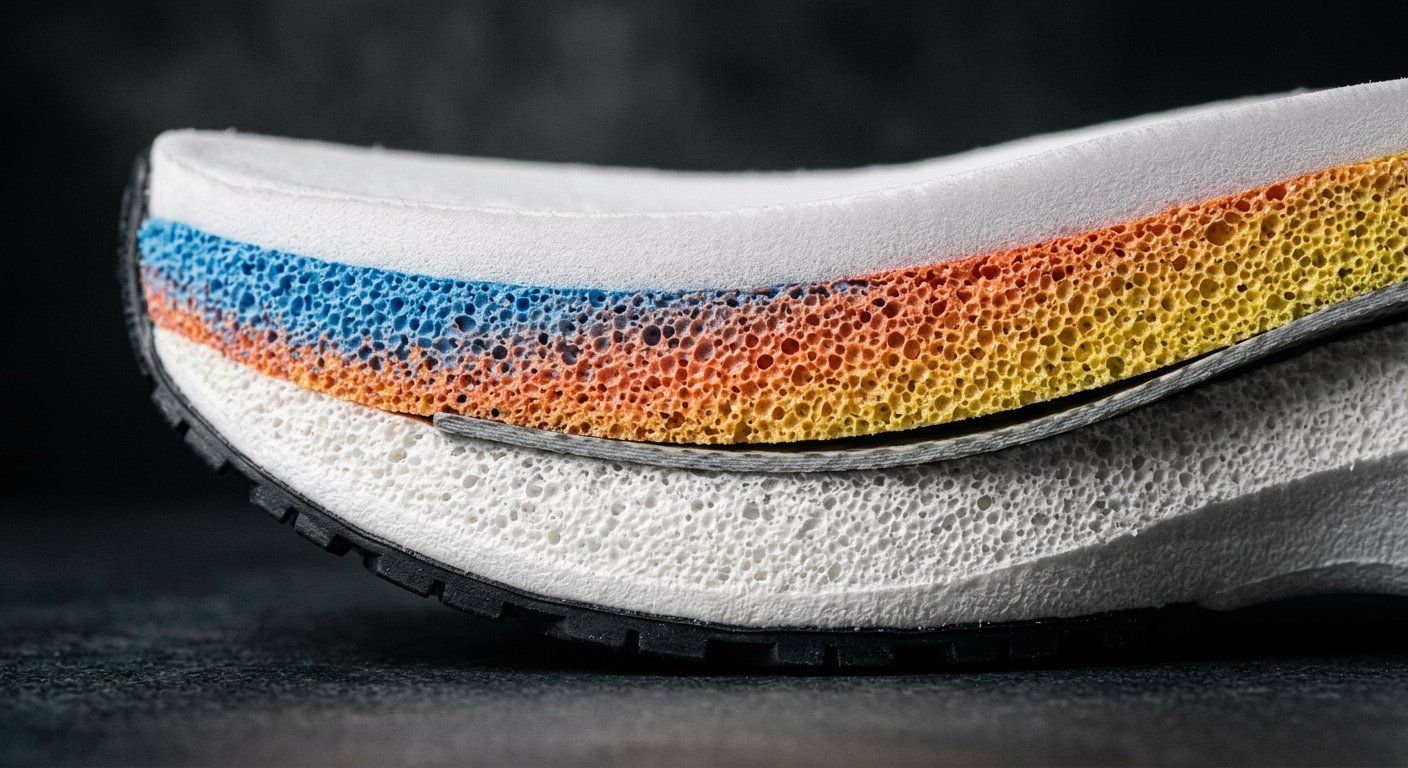
Shoe marketing loves words like “energy return”, “cloud foam” and “guide rails”. Underneath the branding are four real engineering concepts that determine how a shoe feels. This guide explains them plainly, for walkers.
1. Cushioning = the midsole foam
The midsole is the slab of foam between your foot and the ground. What matters:
- Thickness (stack height). Roughly: minimal < 25 mm, moderate 25–35 mm, high 35–40 mm, maximum 40 mm+. More stack = more impact absorption = less ground feel.
- Material. Basic EVA is fine and durable. Supercritical/EVA-blend foams (Fresh Foam X, DNA Loft, FF Blast, Boost TPU) are lighter and more resilient — they bounce back longer instead of packing down.
- Firmness. Soft ≠ better. Very soft shoes can feel unstable and tire your feet if your arches are weak.
For walkers: on concrete, aim moderate-to-high cushioning. On soft trails, you can go lower and enjoy more stability.
2. Heel-to-toe drop
Drop is the height difference between heel and forefoot, in millimetres. A 10 mm drop means your heel sits 10 mm higher than your toes.
- Higher drop (8–12 mm): shifts load toward the forefoot/knees, eases calf and Achilles strain. Common in traditional running shoes.
- Lower drop (0–6 mm): encourages a midfoot landing, works the calves more, feels more “natural”. Common in walking and minimalist shoes.
- Change slowly. Going from 12 mm to 0 mm overnight is a recipe for sore calves.
There’s no universally better option — it’s about what your stride and body prefer.
3. Rocker soles
A rocker is a curved, boat-shaped sole that rolls your foot from heel to toe, reducing ankle and big-toe work. Rockers are genuinely useful for:
- Long, steady walking
- Stiff or arthritic big toes
- People who want less forefoot bending
Trade-off: less stability on uneven ground and a slightly “teetering” feel at first. See which shoes have rockers in the database.
4. Stability and pronation
When you walk, your foot naturally rolls slightly inward (pronation) to absorb shock. That’s normal and healthy. “Stability” features exist for people who roll inward excessively (overpronation):
- Neutral — no correction. Right for most people.
- Guidance — light support that only engages when needed (Brooks GuideRails).
- Stability — firmer, consistent correction (ASICS Kayano, Brooks Adrenaline).
- Motion control — maximum correction for severe overpronation (Brooks Addiction Walker).
A note on medical claims: we describe features, not treatments. If you have persistent pain, see a podiatrist or physiotherapist — a shoe is not a medical device.
5. Two more that matter
- Flexibility — how easily the forefoot bends. Walkers generally like some flex; overly stiff shoes (especially stiff carbon plates) are pointless at walking pace.
- Breathability vs. waterproofing — you trade one for the other. Waterproof membranes (like Gore-Tex) keep water out but trap heat; breathable mesh stays cool but soaks through. Choose for your climate. Filter by waterproof in the database.
How to use this
Rather than memorizing spec sheets, let the tools do it: the shoe finder translates your preferences (soft vs. light vs. natural) into these attributes, and the comparison engine shows the differences between finalists with plain-language hints.
Frequently asked questions
Is more cushioning better for walking?
Not automatically. More cushioning absorbs more impact — useful for long days on concrete — but adds weight, reduces ground feel, and can feel unstable to some walkers. Match cushioning to distance and surface rather than assuming maximum means best.
What heel-to-toe drop should I choose?
There's no 'correct' drop. Higher drops (8–12 mm) can help heel-strikers and calf-ache sufferers; lower drops (0–6 mm) suit midfoot strikers and people who prefer a natural feel. If you're new to low-drop shoes, transition gradually — your calves will notice.
Do I need a stability shoe?
Only if you overpronate (your foot rolls inward excessively) and a neutral shoe feels unsupportive — or if a professional has recommended support. Most walkers are neutral and should not add correction they don't need. When in doubt, ask a podiatrist or a good running-store fitter.
Ready to apply this? Use the shoe finder · filter the database · compare shoes