Walking Shoes vs. Running Shoes: What's Actually Different?
The real differences between walking and running shoes — geometry, rocker, cushioning, weight and durability — and when it matters for everyday walkers.
Updated August 15, 2026 · by the Best Shoes for Walking team
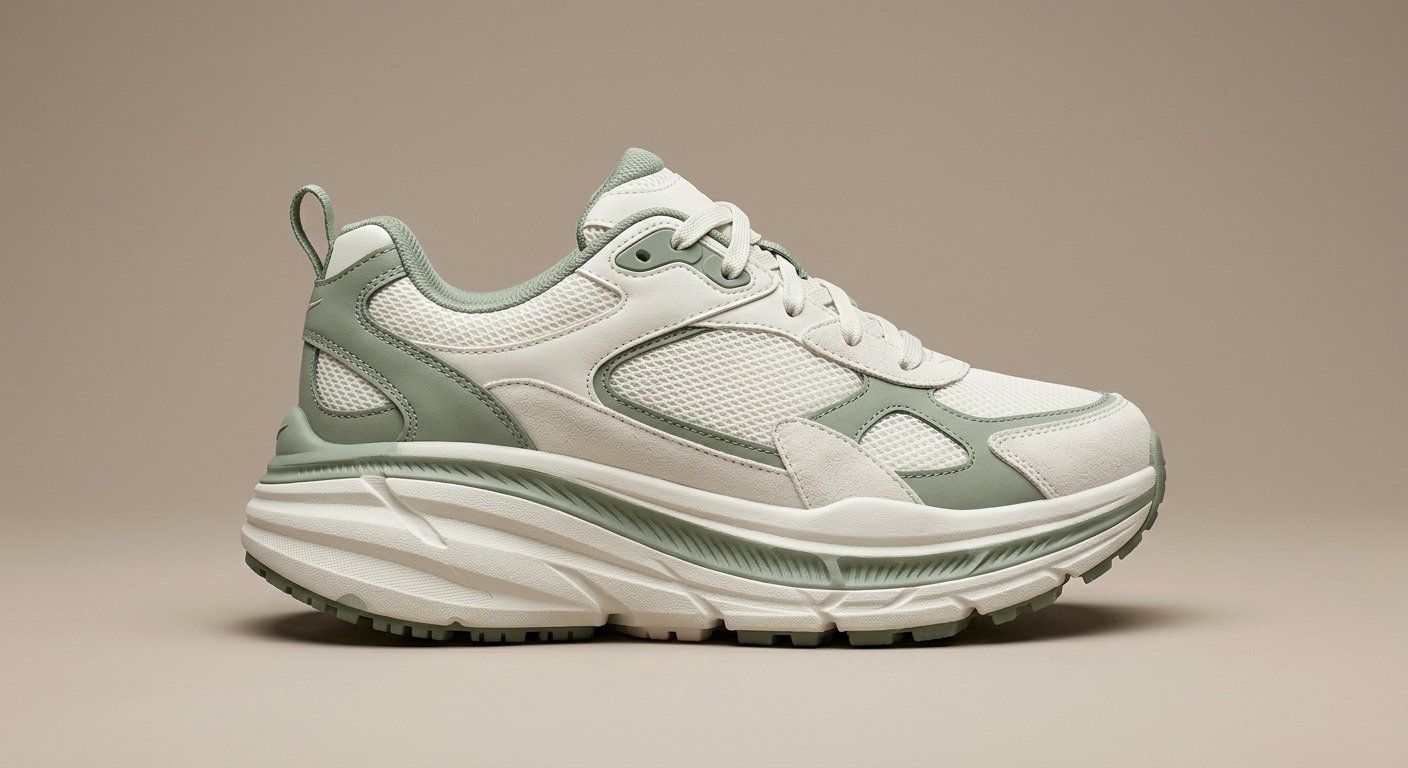
The honest answer: the line between “walking shoe” and “running shoe” is blurrier than marketing suggests. A huge share of people happily walk in running shoes — and many “walking shoes” are running shoes with different branding. But there are real, mechanical differences worth knowing, because they change how a shoe feels at walking pace.
What actually differs
1. Impact forces and cushioning needs
Running hits the ground with roughly 2–3× body weight per step; walking is gentler. So runners need more impact protection — which is why running shoes grew thick, soft midsoles. Walkers benefit from that cushioning too (especially on concrete), but they don’t require it. Many walkers are happiest in moderate cushioning with more ground feel.
2. Heel-to-toe drop and geometry
Running shoes often have a higher heel-to-toe drop (8–12 mm) to help with heel-striking at speed. Walking shoes frequently sit lower (0–8 mm) for a more natural, stable stride. Neither is “correct” — it’s a preference — but a high-drop shoe can feel like it’s tipping you forward on slow walks.
3. The rocker sole
This is the big one. Many modern walking shoes use a rocker — a curved sole that rolls your foot from heel to toe, reducing the work your ankle and toes do. At a steady walking cadence a rocker can feel wonderful; at a jog it can feel vague. If you mostly walk, a rocker is worth trying (see the cushioning & drop guide).
4. Flexibility vs. stiffness
Running shoes are often stiffer through the midfoot to stabilize fast transitions. Walking involves less force, so walkers generally tolerate — and often prefer — more flexibility. A stiff, plated “super shoe” is wasted on walking and can feel like clogs.
5. Weight
Lighter is nicer for walking, but the penalty is small at low speeds. Don’t obsess over grams; 8–11 oz is a normal range. Use the database to filter by weight if it matters to you.
6. Durability and outsoles
Running-shoe outsoles are tuned for road wear; walking outsoles are often harder-wearing because walkers log more time per mile. Trail and hiking hybrids (e.g. the Merrell Moab 3) bring burly outsoles and waterproof options that running shoes rarely match.
When a running shoe is a fine walking shoe
- Neutral, well-cushioned daily trainers (Brooks Ghost, New Balance 1080, ASICS Cumulus) are superb walkers.
- If you already run in a shoe and it’s comfortable to walk in, keep using it.
When to choose a walking-specific design
- You stand all day — look for slip resistance and all-day support (Hoka Bondi SR, Dansko, Brooks Addiction Walker).
- You have a wide or hard-to-fit foot — walking brands offer more width options.
- You want a rocker that’s tuned for walking pace.
- You walk in wet or mixed conditions — walking and hiking lines offer more waterproof options.
The practical takeaway
Don’t ask “is this a walking shoe?” — ask the same questions for any shoe:
- Does it fit my width and shape? (width finder)
- Is the cushioning right for my distance and surface?
- Does the geometry (drop, rocker, flexibility) suit my stride?
Our shoe finder does exactly this — it scores shoes on how you walk, not on which category the box says. And if you’re torn between two models, compare them side-by-side.
Frequently asked questions
Can I just walk in running shoes?
Usually, yes — a well-cushioned neutral running shoe is often an excellent walking shoe. The differences matter most at the extremes: a heavily rockered race shoe can feel unstable at walking pace, while a soft 'max-cushion' shoe is often *better* for walking than running.
Are 'walking shoes' a marketing invention?
Partly. The category is real — some shoes (like the Nike Motiva or Brooks Addiction Walker) are genuinely designed for walking biomechanics — but many 'walking shoes' are just running shoes relabeled. Judge the spec sheet, not the label.
Do I need a running shoe if I walk fast?
If you walk briskly enough that you'd describe it as a workout, a lightweight neutral running shoe works well. A dedicated racing flat is overkill and often too unstable at walking speeds.
Ready to apply this? Use the shoe finder · filter the database · compare shoes