The Best Walking Shoes for Travel: What Actually Holds Up
How to choose travel walking shoes that survive 20,000-step sightseeing days — weight, breathability, versatility, break-in and packing strategy.
Updated August 15, 2026 · by the Best Shoes for Walking team
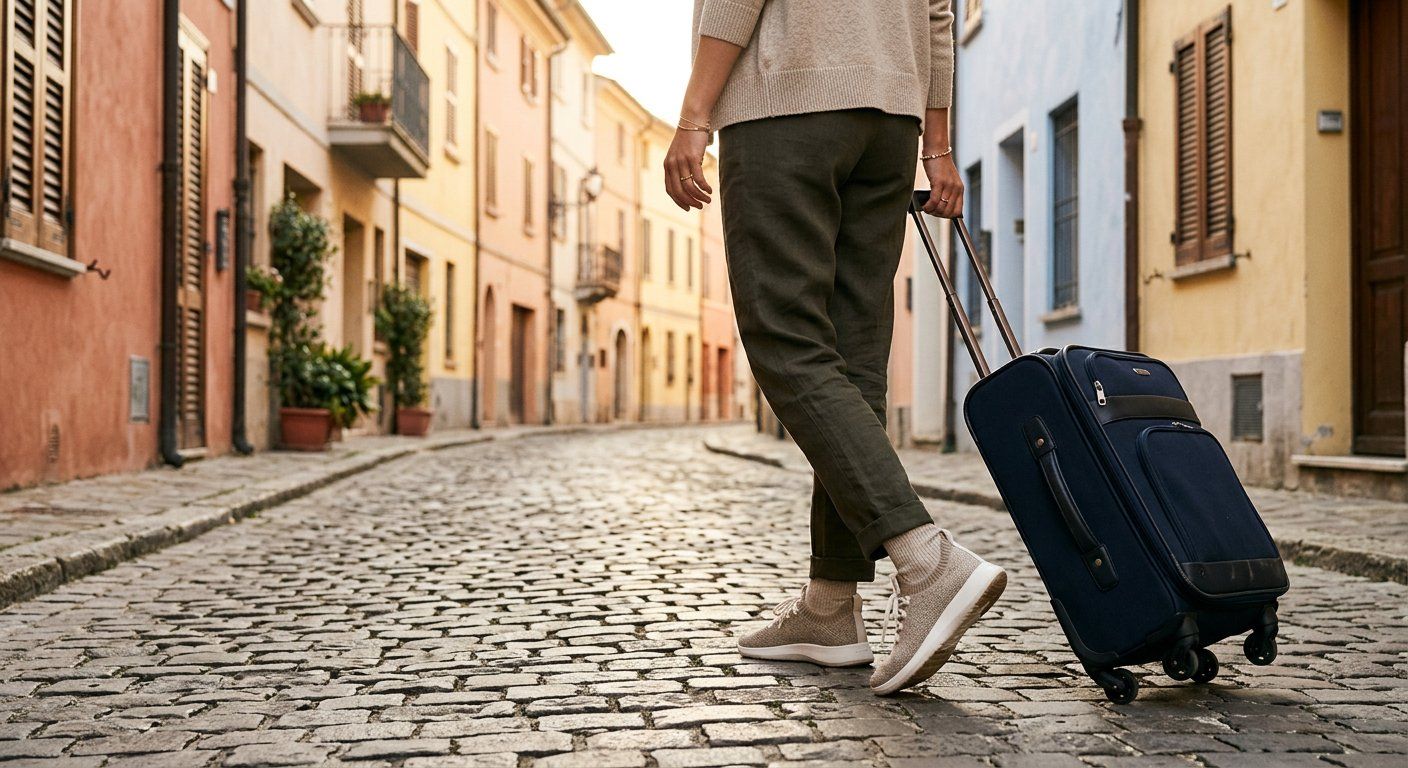
Travel is walking’s ultimate stress test: 20,000-step days, cobblestones, museum floors, airport terminals, and no home closet to swap shoes. The right choice makes the trip; the wrong one ends it by day two.
What travel demands of a shoe
- Volume. You’ll walk more than usual, on unfamiliar surfaces, often carrying a daypack.
- Surface variety. Polished marble (slippery), cobblestones (uneven), pavement, park paths, wet stone.
- Packing constraints. Shoes are the bulkiest thing in a bag; a second pair must earn its place.
- Long days. More hours on foot than miles — so comfort over time matters, not just distance.
What to prioritize
1. Broken-in before you go
Non-negotiable. Buy at least two to three weeks before departure and walk regularly. Never debut shoes on a trip.
2. Light and breathable
A shoe under ~9 oz with a breathable upper keeps feet cooler and dries faster — important for warm climates and hand-washing socks in hotel sinks. Knit and mesh uppers beat leather for this.
3. Versatile enough to go “nice”
One shoe that works for walking and looks acceptable at a casual restaurant saves a packing slot. Neutral colors (oat, grey, sage) do double duty.
4. Cushioned for concrete
City travel is mostly hard surfaces. Moderate-to-high cushioning pays off by evening. Use the database for travel-friendly options.
Scenario playbook
- European city trip (spring/fall): a breathable everyday walking shoe. Bring one waterproof option only if rain is likely.
- Hot/humid destinations: maximum breathability; pack two pairs to rotate (they’ll sweat).
- Mixed trail + city (New Zealand-style, if we may): a crossover shoe like the Hoka Transport 2 — street-clean with real grip for gravel paths.
- Rainy season: a genuinely waterproof shoe, worn on the wettest days, plus a fast-drying mesh pair for the rest.
The packing strategy
- Wear your bulkiest, main walking shoes on the plane; pack the lighter second pair.
- Rotate pairs day-to-day so each dries fully.
- Good socks matter as much as shoes: merino or synthetic blends, never cotton, and change them mid-day on heavy days.
What to avoid
- Brand-new shoes (see above)
- All-leather shoes in hot climates
- A single pair of waterproof shoes for a whole trip (hot, slow-drying)
- High-fashion shoes with zero arch support for 12-hour days
Ready to pick? Run the shoe finder with “Travel” as your primary use — it weighs lightweight and breathability into the score — then compare the top matches and read the full choosing guide before you buy.
Frequently asked questions
How many pairs of shoes should I pack for a walking-heavy trip?
Two is the sweet spot: one broken-in walking shoe for long days, plus a second lightweight option (a recovery sandal, a dressy-but-walkable shoe, or a different walking shoe to rotate). Rotating two pairs lets each one dry and recover between days.
Should I buy new shoes right before a trip?
No. Break shoes in for at least two to three weeks of regular walking before you travel. New shoes on a 15-mile sightseeing day are the fastest route to blisters.
Are waterproof shoes better for travel?
Only if you'll face real rain. Waterproof shoes run warmer and dry slowly once wet. For most city travel, a breathable shoe plus fast-drying socks is more comfortable — and if a downpour soaks them, they'll dry overnight.
Ready to apply this? Use the shoe finder · filter the database · compare shoes